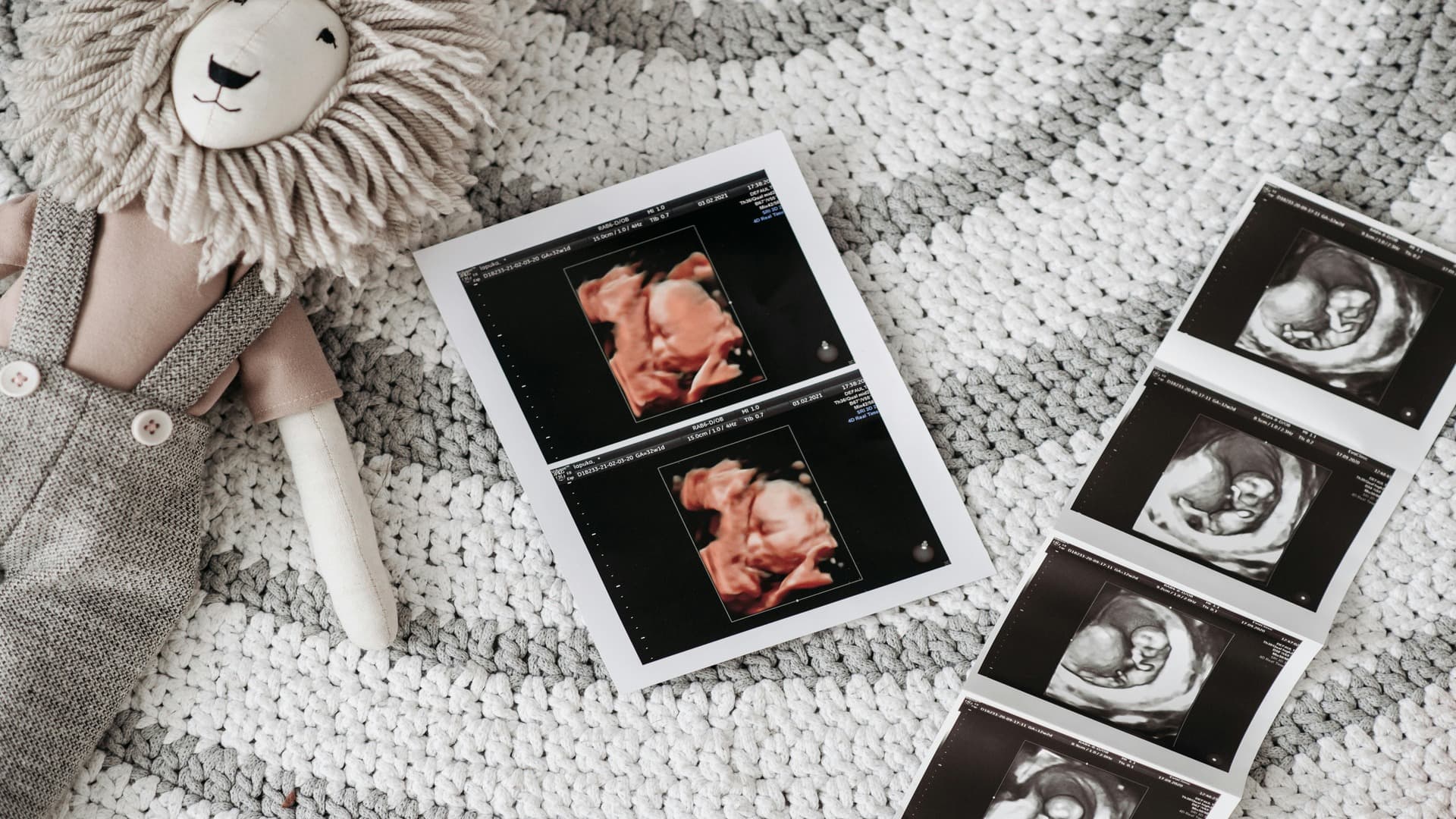
How do you determine fetus size by week?
The size of a fetus can be estimated using a variety of techniques, which is why different sources will provide different figures.
The estimated fetal weight (EFW) and height of a fetus are determined by experts using formulas that are not always the same. Equations for estimating weight typically employ the following measurements: femur (thigh bone) length (FL), head circumference (HC), abdominal circumference (AC), and biparietal (head) diameter (BPD).
Although height is an easy measurement to take, there are some modifications in how it is taken after the first trimester. The baby's height is measured for the first 13 weeks starting at the top of the head and working down to the bottom. Your baby appears to grow 3 inches from week 13 to week 14 on the chart below because the measurement is taken from the top of the head to the baby's heel after the first 13 weeks!
When measuring your baby with ultrasound technology, the numbers on our chart should match the numbers your healthcare practitioner will be comparing against. (However, after 13 weeks, providers stop measuring height, so don't expect to receive those measurements at your ultrasound appointments.)
{module id="128"}
Fetal growth chart
Do you ever wonder how large your baby becomes every week that you are pregnant? You can get an idea of your baby's size by looking at the figures in our chart below. Remember that your baby can be either smaller or larger than these figures. That's acceptable; healthy newborns might weigh as little as five pounds or as much as nine pounds. You can explore what happens in those early weeks as your baby begins forming essential structures.
Even at this early age, the dimensions of boys and girls differ. We've averaged the numbers for males and girls on our chart. Recall that height measures taken up until week 13 are estimates from head to toe, but those taken beginning at week 14 are estimates from head to bottom.
Gestational age
Length (US)
Weight (US)
Length (cm)
Mass (g)
8 weeks
0.62 inches
0.71 ounces
1.57 cm
20 grams
9 weeks
0.91 inches
0.95 ounces
2.30 cm
27 grams
10 weeks
1.22 inch
1.23 ounces
3.1 cm
35 grams
11 weeks
1.61 inch
1.59 ounces
4.1 cm
45 grams
12 weeks
2.13 inches
2.05 ounces
5.4 cm
58 grams
13 weeks
2.64 inches
2.58 ounces
6.7 cm
73 grams
14 weeks
5.79 inches
3.28 ounces
14.7cm
93 grams
15 weeks
6.57 inches
4.13 ounces
16.7 cm
117 grams
16 weeks
7.32 inches
5.15 ounces
18.6 cm
146 grams
17 weeks
8.03 inches
6.38 ounces
20.4 cm
181 grams
18 weeks
8.74 inches
7.87 ounces
22.2 cm
223 grams
19 weeks
9.45 inches
9.63 ounces
24.0 cm
273 grams
20 weeks
10.12 inches
11.68 ounces
25.7 cm
331 grams
21 weeks
10.79 inches
14.07 ounces
27.4 cm
399 grams
22 weeks
11.42 inches
1.05 pounds
29.0 cm
478 grams
23 weeks
12.05 inches
1.25 pounds
30.6 cm
568 grams
24 weeks
12.68 inches
1.48 pounds
32.2 cm
670 grams
25 weeks
13.27 inches
1.73 pounds
33.7 cm
785 grams
26 weeks
13.82 inches
2.01 pounds
35.1 cm
913 grams
27 weeks
14.41 inches
2.33 pounds
36.6 cm
1055 grams
28 weeks
14.80 inches
2.67 pounds
37.6 cm
1210 grams
29 weeks
15.47 inches
3.04 pounds
39.3 cm
1379 grams
30 weeks
15.95 inches
3.44 pounds
40.5 cm
1559 grams
31 weeks
16.46 inches
3.86 pounds
41.8 cm
1751 grams
32 weeks
16.93 inches
4.30 pounds
43.0 cm
1953 grams
33 weeks
17.36 inches
4.77 pounds
44.1 cm
2162 grams
34 weeks
17.84 inches
5.24 pounds
45.3 cm
2377 grams
35 weeks
18.23 inches
5.72 pounds
46.3 cm
2595 grams
36 weeks
18.62 inches
6.20 pounds
47.3 cm
2813 grams
37 weeks
19.02 inches
6.68 pounds
48.3 cm
3028 grams
38 weeks
19.41 inches
7.13 pounds
49.3 cm
3236 grams
39 weeks
19.72 inches
7.57 pounds
50.1 cm
3435 grams
40 weeks
20.08 inches
7.98 pounds
51.0 cm
3619 grams
41 weeks
20.39 inches
8.35 pounds
51.8 cm
3787 grams
Fetal weight by week: How it changes
Throughout your pregnancy, your unborn child acquires weight gradually, though not necessarily at the same rate. Your baby's growth rate accelerates until 35 weeks if you are expecting a single child, not twins or multiples. After that, it decelerates.
Based on estimates, the following are some highlights:
- Up until 16 weeks, a fetus grows an average of about 19 grams per week, gradually increasing from 7 grams per week at 8 weeks to 15 grams per week at 12 weeks and 29 grams per week at 16 weeks.
- By 20 weeks, a fetus is gaining about 59 grams per week (just over 2 ounces).
- By 30 weeks, a fetus is gaining about 175 grams each week (more than 6 ounces).
- At 35 weeks, a fetus is gaining about 215 grams each week, or about 7.5 ounces. At this point their growth rate peaks.
- After 35 weeks, growth slows to about 188 grams per week, or 6.6 ounces. (Twins slow earlier, at around 28 weeks, and then average about 170 grams each week.)
- In the last few weeks of pregnancy, the growth rate continues to gradually slow to about 168 grams (a little less than 6 ounces) per week by week 40.
Many parents notice more visible second trimester changes as growth speeds up.
During your prenatal checkups, your practitioner will use a fundal height measurement—a tape measure placed over your belly—to determine the approximate size of your unborn child. The measurement in centimeters should approximately correspond to the gestational age of your child starting at approximately 24 weeks. Your fundal height, for instance, should be roughly 26 cm, give or take a centimeter in either direction, if you're 26 weeks pregnant. Your provider may monitor growth even more closely in the final weeks as the due date gets closer.
Your provider will use ultrasonography, which is more exact, to measure your baby's size if they think they are too small. Your doctor can estimate the size of your baby by using ultrasound to evaluate things like head circumference and diameter, abdominal circumference, and femur length. To examine the blood flow to your placenta, they might also do a Doppler ultrasound.
Your infant may be diagnosed with intrauterine growth restriction (IUGR), also known as fetal growth restriction (FGR), if their estimated weight is less than the 10th percentile for their gestational age. IUGR can occur at any point throughout a pregnancy. While some infants with IUGR just grow out to be tiny for their age, there are other situations when the baby's development is stunted.
A newborn diagnosed with IUGR is referred to as "small for gestational age." While the majority of healthy SGA infants grow up perfectly well, some (particularly those who are born preterm) are more likely to experience issues like jaundice, low blood sugar, c-sections, and even long-term developmental and health issues.
{module id="129"}
Your baby's size by week
Here are some highlights of your baby's growth during pregnancy:
- At 20 weeks, about the midpoint in your pregnancy, your baby is transmitting taste signals to their brain. And you may feel them hiccupping. Your baby's weight at 20 weeks is about 11.68 ounces, and they're about the length of a (10.12-inch) banana.
- At 32 weeks, your baby's lungs are developing fast, and your baby's storing minerals like iron for their first 6 months of life. Your baby's weight at 32 weeks is 4.30 pounds, and their length is 16.93 inches, about the size of a jicama.
- At 33 weeks, things are getting snug in there! Your baby's skin is becoming less wrinkled as they fill in – your baby's weight at 33 weeks is about 4.77 pounds. At 17.36 inches, your baby is now about the size of a pineapple. Alongside physical growth, many families also notice new emotional shifts as the due date approaches.
- At 37 weeks, your baby's brain and lungs are still maturing, and they're still moving a lot, despite the close quarters. Your baby's weight at 37 weeks is about 6.68 pounds, and they're about the length of a bunch of Swiss chard, 19.02 inches.
Once your baby is born, they'll be weighed and measured, and your provider will continue to monitor their growth. While the average newborn weight is a little over 7 pounds, most newborns lose about 5 to 10 percent of their weight in the first days. No worries – they gain it back by the time they're about 2 weeks old, and by 4 months they usually double their birth weight. And if you ever need a calm voice along the way, a supportive AI is always here to help you navigate the journey.