Find what you're carrying
Search, or pick a topic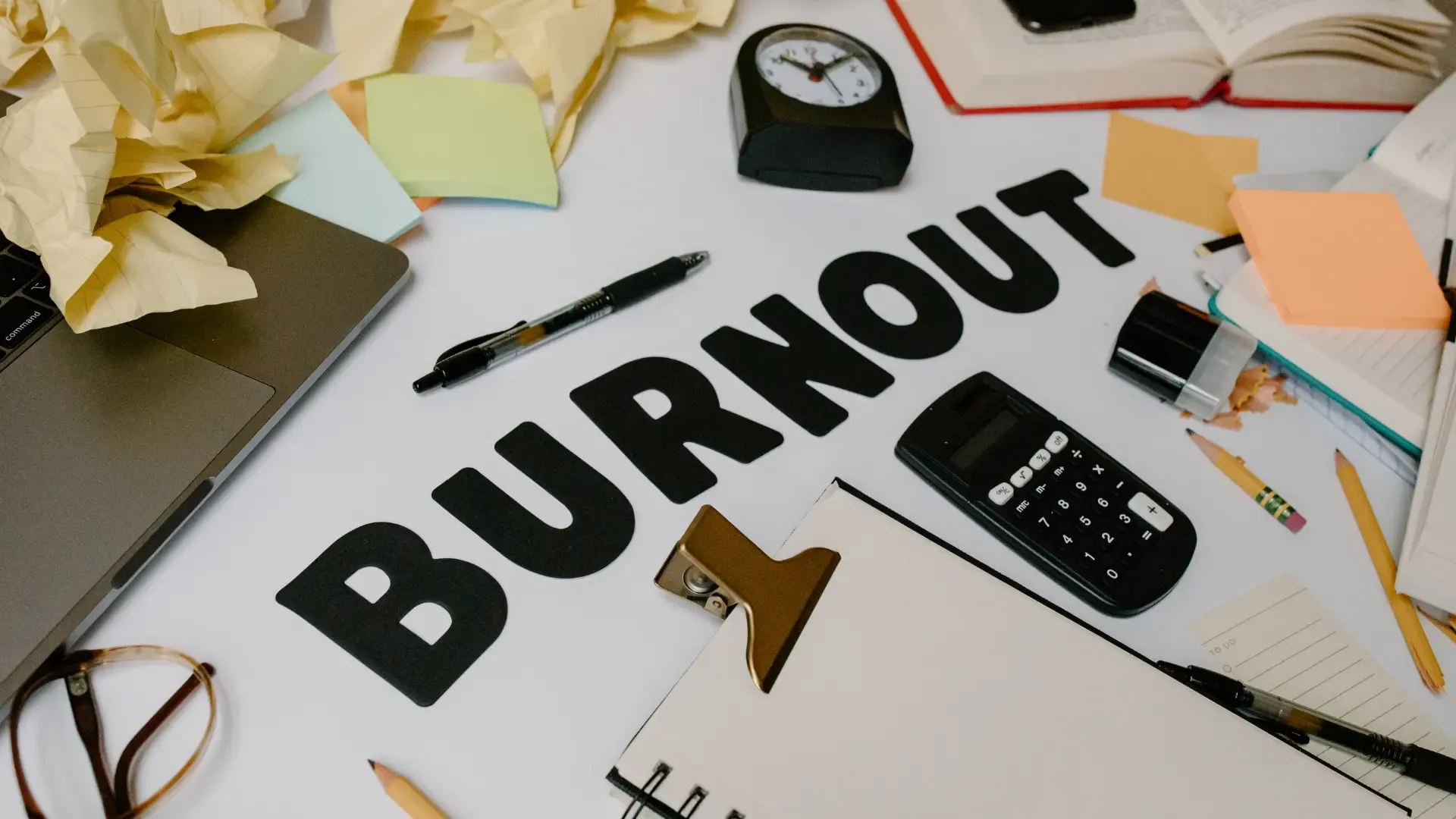 12 min
Stress and Anxiety
Burnout vs. Chronic Stress: How to Tell the Difference (and What Your Body Is Telling You)
Burnout vs Chronic Stress: What’s the Difference? Burnout and chronic stress can feel similar, but they are not the same thing. Chronic stress keeps your nervous system in a prolonged state of activation, while burnout is the state of depletion that follows. For women, hormonal fluctuations, caregiving demands, and the pressure to keep functioning can make the difference between the two harder to recognize.
 16 min
Stress and Anxiety
What Is the HPA Axis and Why Does Chronic Stress Dysregulate It?
What Is the HPA Axis and Why Does Chronic Stress Dysregulate It? The HPA axis is your body's primary stress response system - a communication loop between your brain and your adrenal glands that releases cortisol when you face a threat and is supposed to switch off once the threat has passed. When chronic stress keeps it activated too long, that shutdown mechanism stops working properly. This article explains how the system works, what dysregulation actually looks like, and why women are particu
 7 min
7 minEmotions and Mental Health
Soula Care vs Other Mental Health Apps: Which One Is Actually Built for Women?
Most mental health apps were not designed with women's biology in mind. They offer mood logging, breathing exercises, and guided meditation - useful tools, but built for a generic user. When you are dealing with anxiety that spikes before your period, emotional fatigue mid-luteal phase, or mood shifts you cannot explain, a generic app gives you generic answers. This comparison looks at how Soula Care stacks up against the most popular mental health and cycle apps available in 2026 - not just on
 7 min
7 minEmotions and Mental Health
Why AI Mental Health Support Should Sync With Your Hormonal Cycle
Most mental health apps treat mood as a universal experience. They ask how you feel today, offer a breathing exercise, and move on. But for many women, mood does not change randomly - it changes with hormonal shifts across the menstrual cycle . That difference matters. A support tool that ignores the cycle can misread patterns, recommend the wrong interventions, and miss the real reason stress, anxiety, irritability, or emotional fatigue keeps returning at the same time every month. Soula Care w
 8 min
8 minEmotions and Mental Health
Best Apps for Cycle Syncing, Mood Tracking, and Mental Health Support in 2026
Most mental health apps were not built for women. They track your mood, offer breathing exercises, and suggest meditation - but they treat every user the same, regardless of where they are in their hormonal cycle. That is a significant gap, because research consistently shows that estrogen, progesterone, and cortisol fluctuations directly affect anxiety levels, emotional regulation, sleep quality, and stress resilience throughout the month. In 2026, a new category of apps is emerging that closes
 21 min
Stress and Anxiety
7 Somatic Exercises for Anxiety Relief (Science-Backed, Step-by-Step)
Somatic exercises are body-based practices that work directly with your nervous system to interrupt anxiety at its physiological root - not by changing how you think, but by changing what your body is doing. Unlike cognitive tools, they bypass the thinking brain entirely and send safety signals straight to the part of your nervous system that decides whether you're in danger. This guide covers 7 evidence-backed techniques with step-by-step instructions you can use at home, at work, or anywhere a
 26 min
Stress and Anxiety
Polyvagal Theory Explained Simply: What It Means for Your Anxiety
Polyvagal theory is a framework for understanding how your autonomic nervous system (the part of you that runs below conscious awareness) determines whether you feel safe, anxious, or completely shut down. Developed by neuroscientist Dr. Stephen Porges, it explains why your body responds to stress the way it does, why you can't always think your way out of anxiety, and what you can actually do about it. This guide explains the full framework in plain language, with no jargon left untranslated.
 16 min
Stress and Anxiety
The 4 Nervous System States Explained: Fight, Flight, Freeze, and Fawn
The 4 Nervous System States Explained: Fight, Flight, Freeze, and Fawn Your nervous system has a few main ways of responding to stress. Sometimes it mobilizes you into action. Sometimes it makes you want to run, hide, shut down, or please everyone around you. These are not personality flaws. They are survival states, and they help explain why you react the way you do under pressure. You may have heard the phrase "fight or flight" before. But there are actually four nervous system states that sha
 15 min
Stress and Anxiety
How Cortisol Changes Across Your Menstrual Cycle (And Why It Explains So Much)
You've probably noticed it. The week where everything feels manageable - where you handle the hard things, bounce back quickly, and feel like yourself. And then, a couple of weeks later, the same life feels completely different. The same stressors hit harder. Recovery takes longer. Your patience runs out faster. You feel things more intensely, and you're not entirely sure why. Here's what most health content won't tell you: that shift is not random. It's not a mood disorder. It's not you being i
 13 min
Emotions and Mental Health
What Is the Window of Tolerance? A Simple Explanation (and Why It Matters for Women)
Have you ever had a day where everything felt manageable? Where you handled the hard email, the difficult conversation, the unexpected change in plans, and you felt okay. Present. Grounded. Like yourself. And then another day, maybe a week later, where the exact same situations felt completely unbearable. Same life. Same you. Completely different capacity. That difference has a name. The window of tolerance is the zone of nervous system activation where you can think clearly, feel your emotions
 16 min
Stress and Anxiety
What Is Nervous System Dysregulation? Signs, Causes & How Women Can Heal
You know that feeling of being exhausted but unable to sleep? Anxious for no clear reason? Snapping at someone you love and not quite understanding why? That's not a character flaw. That's not weakness. That might be your nervous system, and it's trying to tell you something. Nervous system dysregulation is a state in which the autonomic nervous system loses its ability to return to calm after stress. Instead of cycling naturally between activation and rest, the body gets stuck: either locked in
 10 min
Emotions and Mental Health
Menstrual Cycle and Emotions: Why You Feel the Way You Do Each Month
Have you noticed that the same emotions tend to show up at the same time each month? Anger or a sudden wave of sadness? Maybe a burst of energy or even happy tears? Many women can recognize these symptoms and eventually realize that their menstrual cycle and emotions follow a repeating rhythm — even if day-to-day feelings seem unpredictable. These changes reflect how your body responds to hormonal shifts; there is nothing you’re doing wrong.
Page 1 of 33Next →
Reading helps. Talking helps more.
Soula is free to start — private, judgment-free, here at 2am.